
Mortgage Rates Down to the 5%s!
But all real estate is local.


Today’s Read Time: 6 minutes
This week, we’re talkin’ key economic growth indicators, inflation looks about over, and how to build more housing and keep rental growth down.
Let’s get into it.
Today’s Interest Rate: 5.99%
(👇.03% from this time last week, 30-yr mortgage)
The Weekly 3 in News:
Penalizing Institutions from owning/managing housing units will drive up rental prices. As housing analyst Jay Parsons puts it, “Crazy how both [political] parties are racing to be more anti-science than the other one on housing policy (Parsons/Parsons).”
Trump pledges to make housing affordable while keeping values up. Will he be able to deliver? (FoxBusiness).
Nashville News: Construction for Nashville’s underground tunnel project has begun! The project will feature 40+ stops along the way from downtown to Nashville’s airport (WSMV).
I’m out in Big Sky country skiing for a few days, so today will be a quick take. But we’ll see how ranty I feel like getting by coffee #3.
But that said, there was a lot of housing and economic data released last week.
Let’s dig through some of it.
Rates at a 5 Handle!
Rates dipped down to 5.9% this week!
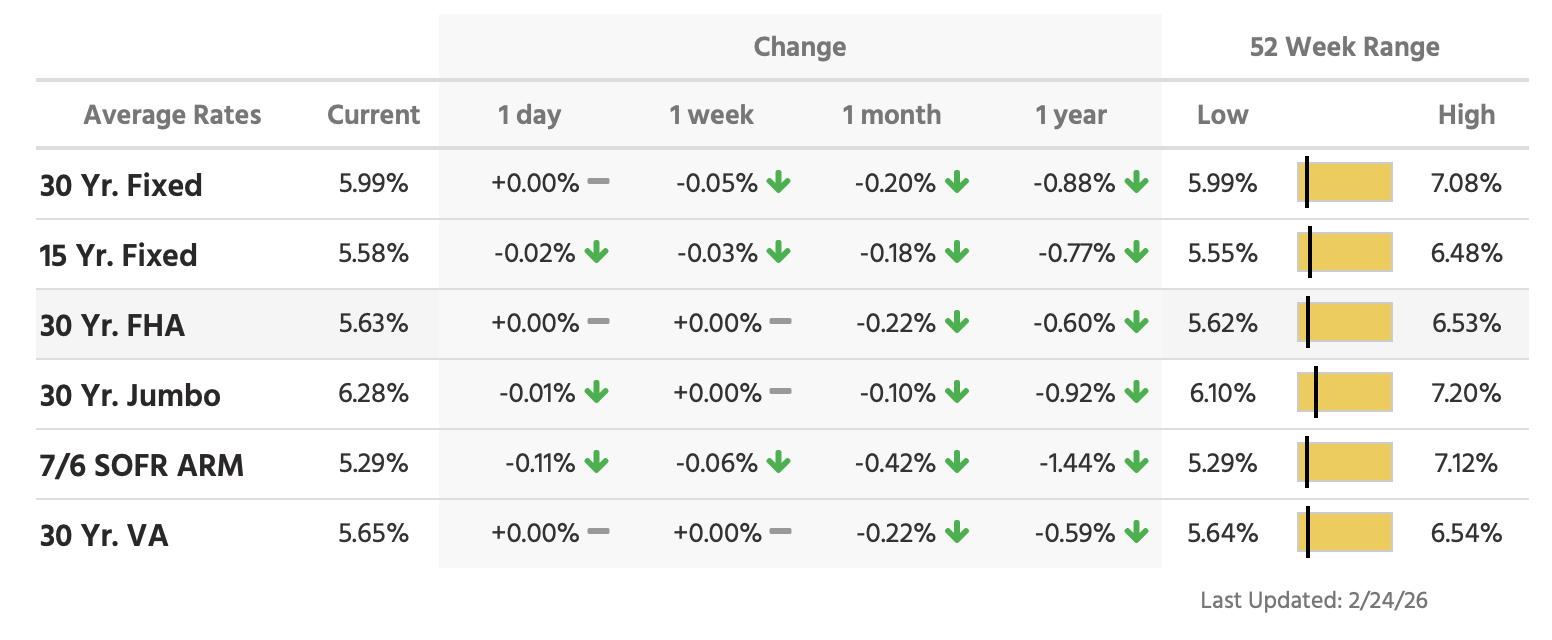
…continuing their slide downward over the 12 months.

Yeeeeeeee.
Again, I am holding on to my prediction of lower rates in the 5s by year's end. I expect this stair step down in mortgage rates to continue, approaching 5.5%.
Anecdote: at our real estate brokerage, incoming interest in real estate investment property purchases has jumped ~33% over the last 7 days.
Folks are taking notice.
Economic Update
Gross domestic product (GDP) rose an anemic 1.4%, in the 4th quarter last year, well below Wall Street estimates for a 2.5% gain (BEA).
The department estimated that the government shutdown last fall subtracted a full 1% from economic growth. The shutdown’s drag was underestimated (and, fun fact, occurred after many forecasts were finalized) and was compounded by federal spending dropping significantly, 16.6% (although lower federal spending should result in future GDP growth).

On the flip side, the main contributors to that smaller GDP growth were increases in consumer spending and investment.
Real final sales to private domestic purchasers, the sum of consumer spending and gross private fixed investment, increased 2.4% in the fourth quarter, compared with an increase of 2.9% in the third quarter. And accelerations in private investment were up, such as in AI infrastructure and intellectual property products (up 7.4%).
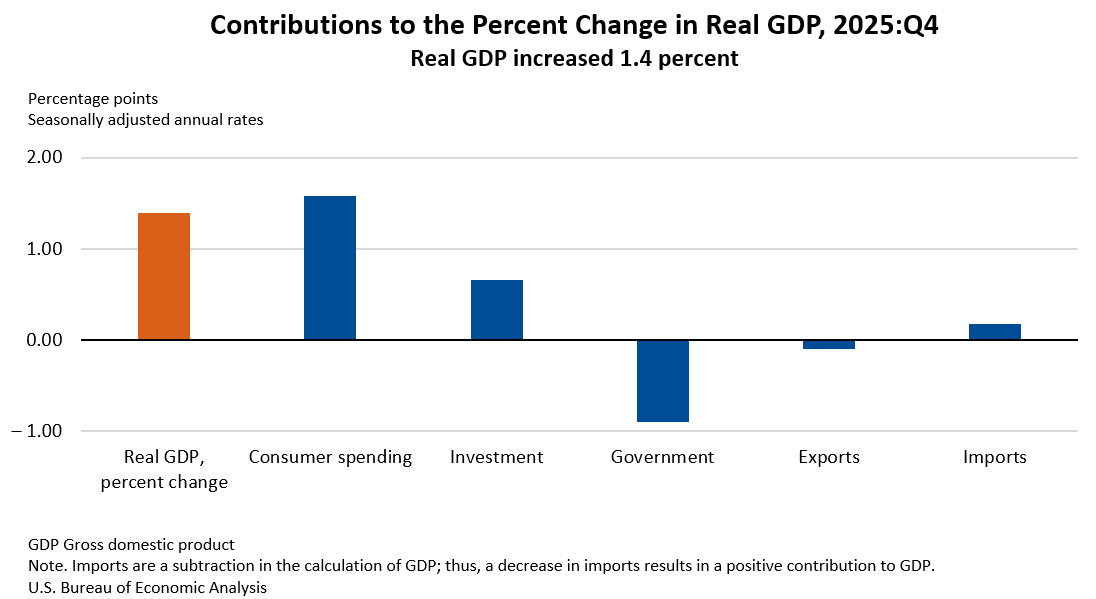
The consumer is still feeling quite spendy. Personal consumption expenditures were up 3.7% in the fourth quarter, compared with an increase of 3.4% in the third quarter.
Economic Anecdote: Heavy Trucking Freight is UP
Flatbed rejection rates have surged to 40%, above 2021 COVD extremes. A bullish signal for heavy industrial manufacturing activity ramping up.
Flatbed rejection rates measure the % of contracted freight loads offered by shippers to carriers using flatbed trailers that are rejected by the carriers. High rates indicate tight capacity and rising spot market prices, often driven by supply-demand imbalances in sectors like construction or manufacturing.
“This sharp increase signals booming demand for industrial freight — steel, lumber, and machinery — as carriers reject contract loads for higher-paying spot shipments…pointing to accelerating activity in manufacturing, construction, and heavy industry across the U.S (FA).”

Bullish.
Inflation Looks to be Passed Us
The personal consumption expenditures (PCE) price index (also a key measure of inflation tracked by the Fed) increased 2.9%, compared with an increase of 2.8%. But, excluding those more volatile food and energy prices, the core PCE price index increased just 2.7%, compared with an increase of 2.9% last quarter.
These inflation numbers were as expected.
We don’t have January data yet because of the lingering data hangover from the government shutdown last fall.
Frankly, this growth was disappointing, even with the 1% mulligan from the government shutdown. I was expecting closer to 3.5-4%.
However, come April-July, I expect a much more robust rebound number, driven by tailwinds from the estimated 22% boost in tax return cash from last year’s tax returns.
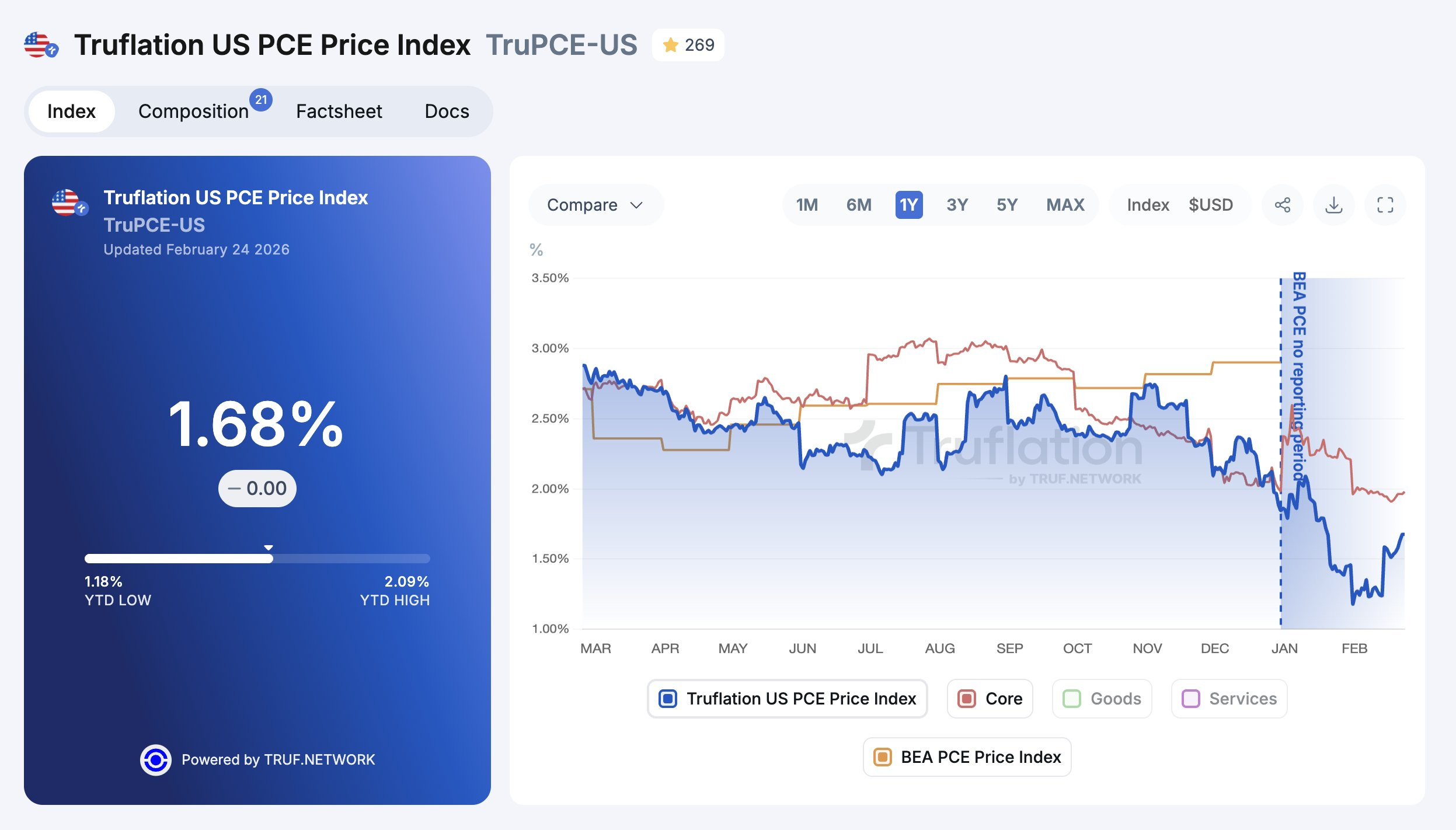
Trueflation numbers - a measure I prefer for its far more accurate shelter cost data - for January were far lower at 1.68%. This index uses millions of actual price points at the point of purchase, sourced from multiple providers, to calculate the most current, comprehensive, and unbiased US inflation indexes.
If you care about or track inflation or mortgage rates. Bookmark their posts: here.
This PCE rate has been cooling through January, dropping below the Federal Reserve’s 2% target. So far in February, it’s edging back up, but still below 2%.
Beware Inaccurate Housing Data
Of note: The official BEA government PCE inflation is hot (above 2%) because their rent/shelter data SUCK and lag 12+ months, making it highly inaccurate in times when the market is shifting. I wrote a long piece on how bad the government data is when it comes to all shelter-type housing data. Hence, private sources like Truflation are quite valuable for us investors to track.
Truflation rent index actually shows DEFLATION, and we in the industry all see this. From large institutional investors to mom and pops, rents are flat to slightly down over the trailing 12 months. Neither the BEA nor the BLS household surveys have yet registered new shelter numbers.
Atlanta Fed Inflation Expectations - Lower
The Atlanta Fed is one of the only government institutions signaling a slowdown in inflation: their expectations measure just now crossed 2% to 1.9%, the lowest meausre since 2019.

This acknowledgement is a big deal, and I expect it to lead to continued lower inflation numbers.
Take notice.
A Quick Ad Break….RentRedi
Ready to Take Your Property Management to the Next Level?
Enter RentRedi. Built by landlords, for landlords
Inspired by people like you, RentRedi makes managing properties smarter, simpler, and more human. Many members of our team also own and manage rental properties.

Plus, Skeptical Investor readers get $100 off. Click this referral link and test drive today!
Want to advertise to the more than 50,000+ weekly readers of The Skeptical Investor? You can! Advertise with us; we can help you grow your business. Reach out.
Ok, back to business.
New Home Sales
Real estate is still moving, even if slower than pre-COVID. And there are some new green shoots.
Since falling off a cliff, new homes are selling like check out counter candy, popping up to nearly ~750k, a multi-year high.
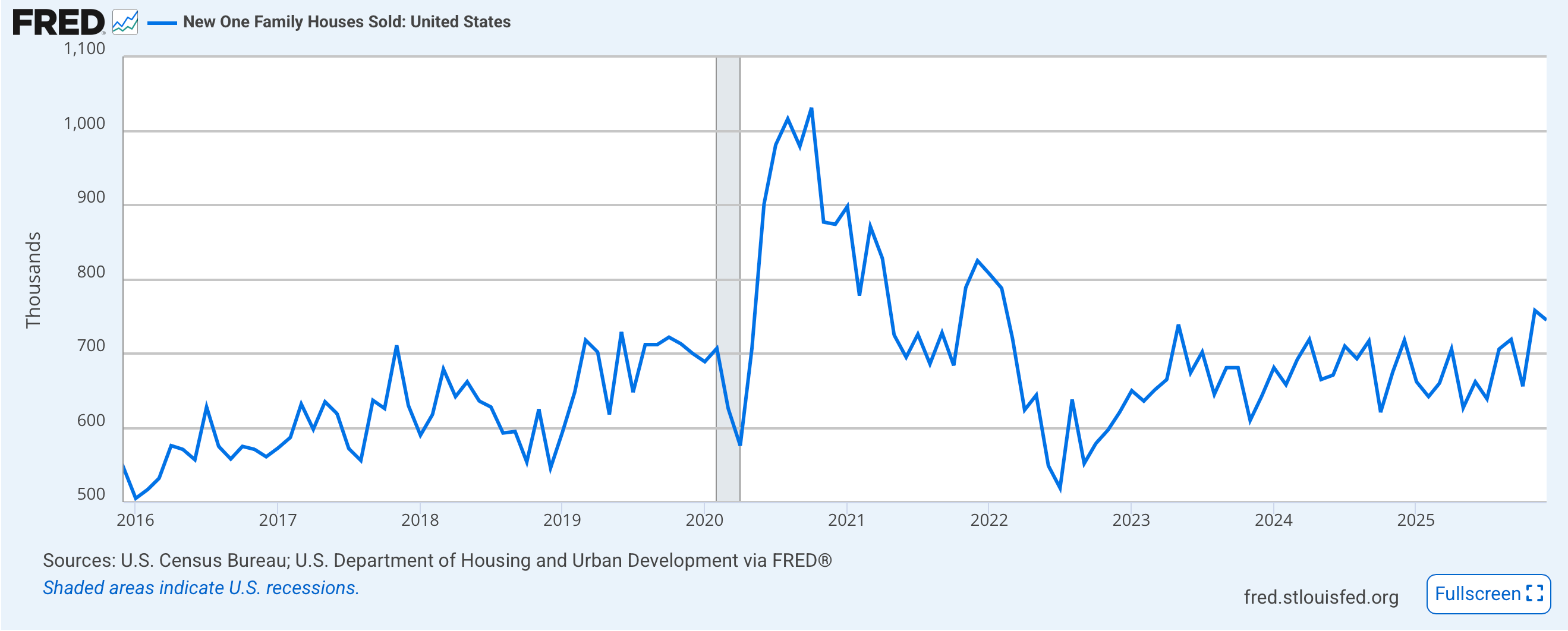
Progress.
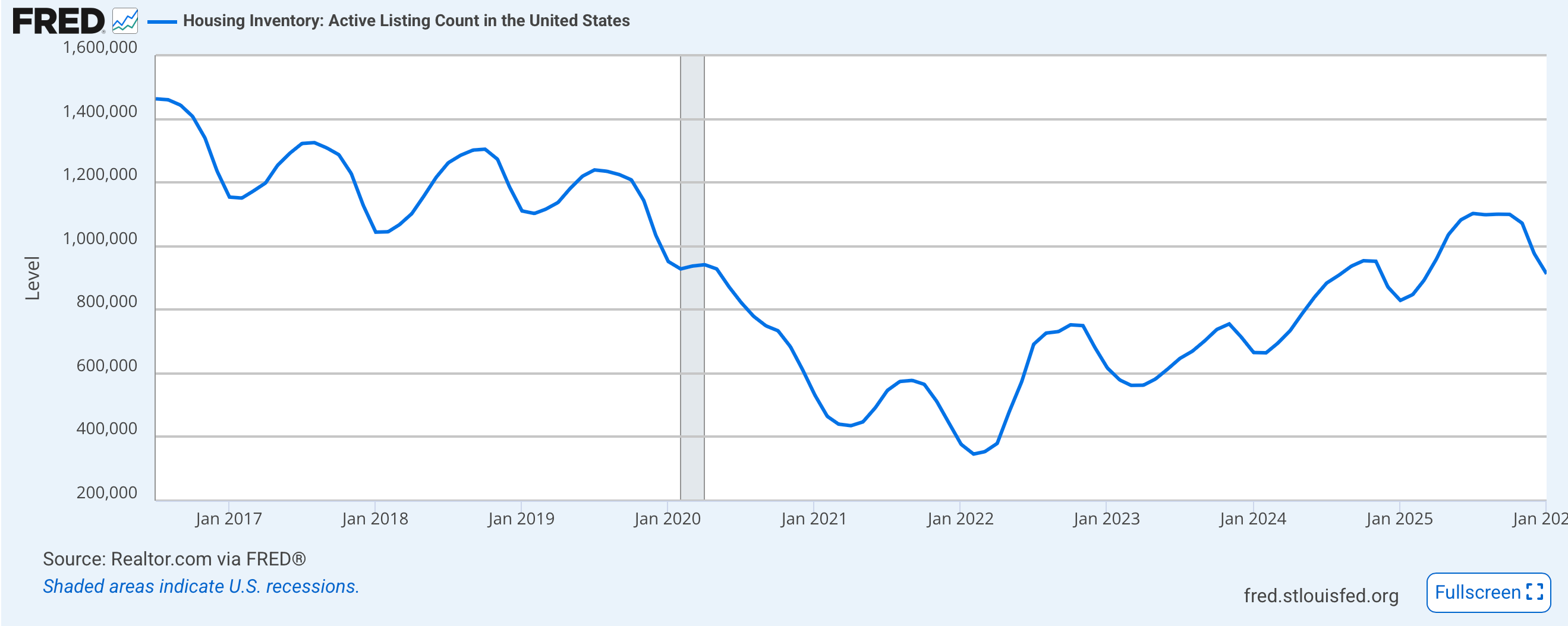
Active listings on the market for sale are more plentiful than this time last year, although still in a normalizing pattern below pre-COVID levels.
But, all real estate is local.
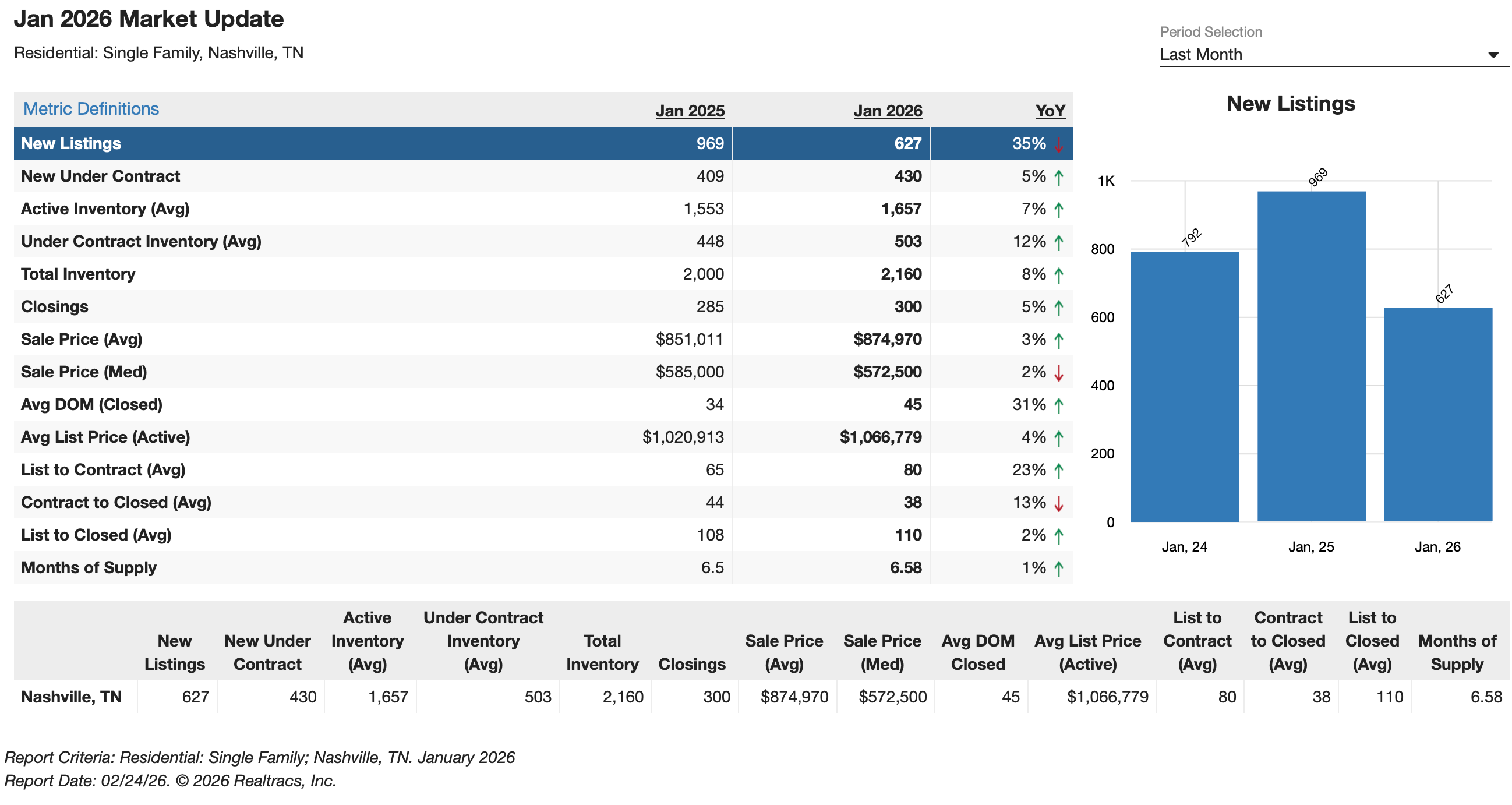
In my home market of Nashville, things are a little different. New listings are down a whopping 35% (likely because of the crazy cold snap we had last month) but all other metrics - from prices to total inventory - are up.
Here is a full metric snapshot from the MLS in Nashville.
Bullish.
My Skeptical Take:
All housing is local.
And the real crisis is not so much because of high mortgage rates, which targeted policies and Fed rate cuts will lower.
The real crisis is in the supply of homes.
This has the most outsized, long-term effect on home price growth.
We have to tackle local building, zoning, over-engineered codes, impact fees and permitting regulations.
These are what’re strangling homebuilding.
According to the National Association of Homebuilders, regulatory policy accounts for….
…checks notes…
25% of homebuilding and 40% of multi-family development costs (NAHB)!
Ask any homebuilder.
Ask your local contractor.
Ask your neighbor, who can’t add 2 beds and baths over their garage for their expanding family because the permitting and time make it cost-prohibitive, or, even worse, the city planning official is having a bad day and just wants to tell everyone “no” (I’ve experienced this firsthand; it’s bullshit).
They’ll all tell you.
Just look at the rental rates vs housing building permits:
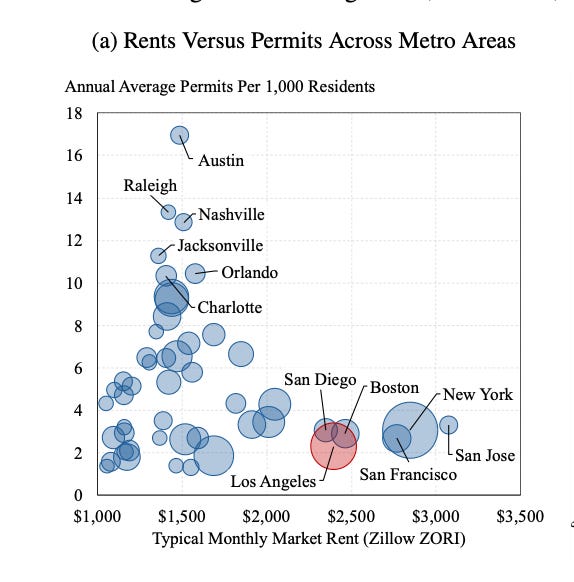
More housing built = lower rents & slower home price growth.
We need to build more housing
How did we get here?
The problem emerged out of the 2008 Great Financial Crisis, where developers and banks didn’t build and fund enough housing, leading to a lost 2 decades of limited housing supply coming on market, then following that with too much stimulus to restart things, spiking inflation and high prices mixed, then pouring more gasoline on the fire by accelerating demand via the Fed’s zero interest rate policy in reaction to the COVID pandemic scare.
Ahhhhh oh the humanity! (Seriously, please stop this seesaw @TheFED).
So, how do we alter the supply of homes?
Not with hollow policies and unfounded feel-good politics, like, for example, banning institutional investors from owning single-family real estate, of which both political parties are bandwagon jumping.
We will know that the Administration and Congress are serious about tackling housing affordability ONLY when they do one thing:
They threaten states and localities by withholding federal dollars until they change these insanely restrictive rat’s nest of home and housing building policies.
This is the cornerstone to fixing housing affordability.
And it will take years to implement.
I hope the Administration takes this step, and utilizes it as the cornerstone of an “emergency declaration on housing.”
Options from this Administration could include:
Forced zoning/density reforms.
Standardize building codes and roll back over engineering in the same name of “safety.” Ironically, safetyism is dangerous.
Provide low-cost loans/guarantees to builders/banks.
Provide more significant incentives for homebuilders + for landlords to renovate and add square footage to existing properties.
Reduce closing costs and offer homebuyer assistance.
Release Fannie and Freddie from government conservatorship.
Provide Federal land to developers for housing.
Suspend or waive environmental and permitting regulations.
Continue to influence the Fed, and nominate more dovish Federal Reserve Governors.
I bet we can think of more, just give me another cup of coffee….
In short, we need a Manhattan Project for Housing.
A plan that is big and audacious.
Hell, we built the Hoover Dam and Golden Gate Bridge in ~5 years, at the same time, during the Great Depression, with 1930s technology!
Why aren’t we still doing this?!
It’s time to get building in America.
Until next time. Stay Curious. Stay Skeptical.
Herzliche Grüße,
—
P.S. Want to level up your real estate game?
You can consult with me, The Skeptical Investor! Get professional advice from someone who actually owns, operates, and brokers real estate.
Want to Grow? - Get clarity on how to grow your business or scale.
Stuck? - Get answers to your problem, let's hop on the phone and figure it out.
No "guru" trying to sell you an expensive course. No BS. No fluff. Only results.
I'll give you my frank, brutally honest advice. Book a call with me today.
It’s 2026. Be an owner.
Schedule your 1-on-1 call now.